

Khadiradi Oil


Khadiradi Oil
Khadiradi Oil — A Moment for Your Daily Oral-Care Ritual
Begin your morning with a little time for yourself. Khadiradi Oil brings together sesame oil and traditional Ayurvedic ingredients for the practice of oil pulling—a quiet addition to your oral-care routine.
Please consult our vaidyas for more information.
FAQ
\n \nHow does Khadiradi Oil fit into my routine?
Khadiradi Oil is intended for oil pulling as part of your oral-care routine. Follow its label directions for the amount, method and frequency of use.
How do I use Khadiradi Oil for oil pulling?
\nSet aside a quiet moment for your oil-pulling ritual. Visit the How to Use tab for the amount to use, how long to swish and how often to practise. Spit the oil out after use; do not swallow it.
\n-
\n
- Why does Ayurveda recommend sesame oil (Til Tail) for Gandusha and Kavala? \n
How does Khadiradi Oil fit alongside brushing?
\nKhadiradi Oil brings the Ayurvedic practice of oil pulling into your daily oral-care ritual. Use it alongside your regular brushing routine. Visit the How to Use tab for guidance.
\nCan I use Khadiradi Oil if I have an oral-health concern?
\nIf you have bleeding gums, persistent bad breath or sensitivity, speak with your dentist before adding oil pulling to your routine. Our vaidyas can also guide you on its traditional Ayurvedic use.
\n-
\n
- Is Khadiradi Tail safe for daily use? \n
What can I expect from the experience?
\nThink of oil pulling as a quiet moment in your daily routine. Take your time, follow the How to Use guidance, and speak with our vaidyas if you would like help making it part of your personal-care ritual.
\n-
\n
- Where can I learn more about Ayurvedic oral-care practices? \n
Delivery & support
Free shipping across India. No minimum order. Orders are processed on the same business day; transit typically takes 3–5 business days after dispatch, depending on location.
Shipping details · Refund & replacement terms
Questions before ordering? care@rajwadasecrets.com
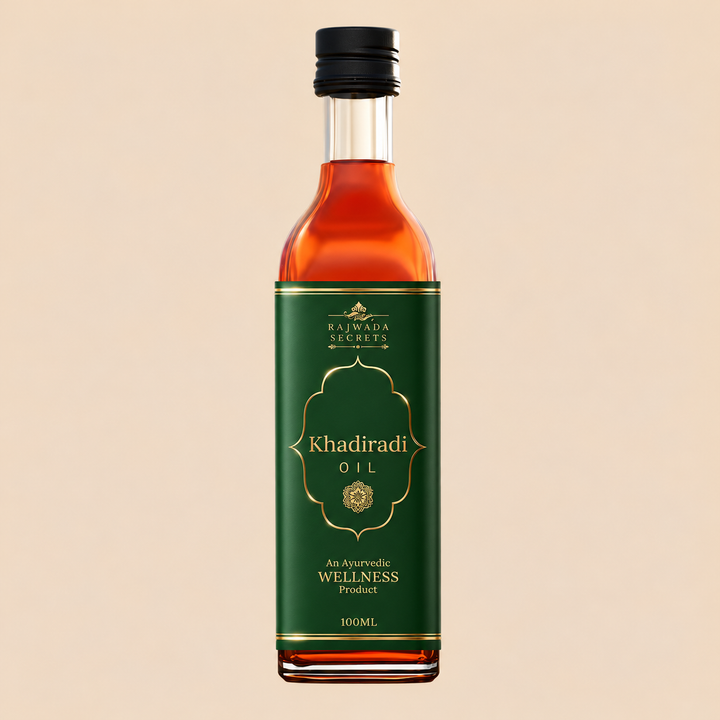
Discover Khadiradi Oil
Sesame oil blended with traditional Ayurvedic ingredients for oil pulling as part of a morning oral-care routine.
How to Use
The Daily Gandusha Ritual — A Royal Ayurvedic Practice
Best Time:
Early morning, on an empty stomach, as part of your Dinacharya (daily routine).
Steps of the Ritual:
- Warm the Oil Slightly (Optional)
Pour 1–2 teaspoons of Khadiradi Oil into a small cup. Warm gently until it becomes lukewarm.
- Swish Gently (Gandusha / Kavala)
Take the oil into your mouth and begin swishing gently. Do not gargle or swallow. Let the oil move through every corner — between teeth, under the tongue, and around the gums.
Time: 5 to 10 minutes for beginners; experienced users may go up to 15–20 minutes.
Pro Tip: Stay relaxed. You may do this while preparing for the day or in quiet reflection.
- Spit It Out
Once the oil becomes thinner and milky, spit it out into a trash bin (not the sink, as oil may clog drains).
- Rinse with Lukewarm Water
Rinse your mouth with warm water or herbal decoction to remove any residue. Follow with tongue scraping and then your usual brushing routine, preferably with a herbal tooth powder.
How Often?
Use daily for overall oral health.
Use 2–3 times a week for targeted gum strengthening or breath issues.
Free From
- Synthetic flavors or fragrances
- Alcohol or chemical preservatives
- Artificial sweeteners or foaming agents
Only pure Ayurvedic ingredients in cold-pressed sesame oil — exactly as it was done in royal Ayurvedic households.
What to Expect
A traditional Ayurvedic oil for your oil-pulling ritual. Make space for an unhurried moment of oral care, following the product’s label directions.
Why It Works: The Ayurvedic View
Khadiradi Oil brings together sesame oil and traditional Ayurvedic ingredients for the practice of oil pulling—a quiet addition to your oral-care routine.
Our Oil Integrity - Rajwada Advantage
We use only cold-pressed oils because this method keeps the oil close to its natural state. No heat. No chemical shortcuts. Just the original goodness, as it should be.
Begin your day like the royals of yore — with clarity in the mouth, purity in the breath, and strength in your smile.
Khadiradi Oil makes oil pulling not just a practice, but a heritage ritual.
Let your first ritual of the day be one of clarity, cleansing, and calm — the Rajwada way.
Perfect for daily use in your Dinacharya (Ayurvedic daily routine).
Ingredients
- Khair Chhal, Maulshree Chhal, Bargad Chhal:
These classical barks have a certain firmness to them. In traditional oral care, they’re used for their tightening and toning effect on the gums. When applied regularly, they give the gums a more “held together” feel — steady, clean, and supported.Til Tail (Black Sesame Oil):
If there is one oil that Ayurveda keeps returning to for Gandusha, it’s sesame. It’s warm, grounding, and spreads beautifully in the mouth. People value it because it leaves the oral cavity feeling nourished and well-lubricated, without any sharp or artificial sensation.Manjistha, Haldi, Lodhra, Mulethi:
This group of herbs behaves gently but with purpose. They’ve been used for ages for their calming nature. When included in an oral formulation, they offer a sense of ease on sensitive spots in the mouth and create a comfortable, settled environment for the gums.Lavang, Elaichi Chhoti, Jayphal, Dalchini, Kababchini, Kapoor:
These spices bring a warm, aromatic touch. Their natural scent feels refreshing, and in use they help the mouth feel cleaner and more balanced. They also discourage that stale feeling that sometimes lingers after meals.Padmakh, Agar, Patang, Dhatki, Musta:
This set of herbs leans toward the cooling and calming side. They have a soothing character and help bring a sense of comfort to the tissues — especially when the mouth feels overheated or irritated.Kalk, Lakh, Kayphal, Nagkesar, Akarkara:
These ingredients add a bit of life to the blend. They have been traditionally used to encourage gentle stimulation in the gums, helping the area feel active and well-circulated. There’s a subtle awakening they bring, especially during oral massage routines.