
No products in the cart.

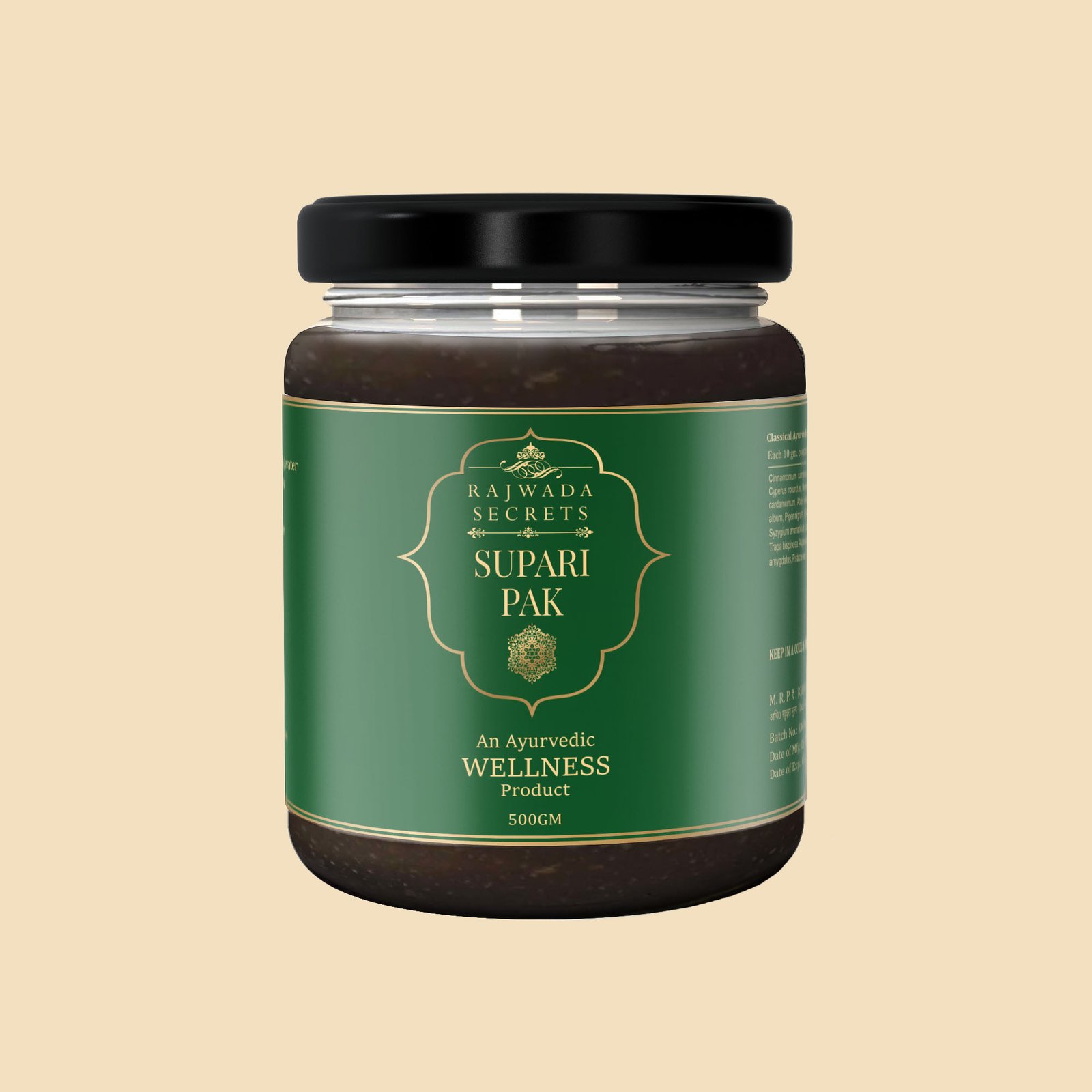
Supari Pak
₹1,200.00
Strengthen Your Core. Celebrate Your Femininity.
Description
Ayurvedic Supari Pak
It’s hard to talk about Supari Pak without thinking of how quietly important it has been in women’s lives for ages. It’s one of those things that older women kept in their cupboards and simply said, “yeh le lo, achha lagega,” and somehow… it did.
Not dramatic, not instant — just supportive in that steady, comforting way.
Supari Pak has this warm, nourishing feel to it. When you take it regularly, you sort of sense the body settling down, finding a little balance again. Especially during times when you’re feeling worn out, or when the body is going through its usual cycles and feels a bit out of tune.
A lot of women also keep it close after childbirth… not as a medicine, but more like a strengthening companion while the body slowly gathers itself again.
It doesn’t claim to transform you overnight. Instead, it steadies you, brings you back to yourself — a little calmer, a little stronger, a little more composed. And whenever you need clarity on how or when to take it, our vaidyas will guide you gently, keeping your body’s own rhythm in mind.
Ingredients
Ingredients
Supari (Areca Nut)
Supari has this naturally astringent vibe — Ayurveda calls it kashaya rasa — and a bit of dryness too (ruksha). People have always used it for its “holding” quality, what the texts call stambhana. It kind of helps the body feel more toned in the lower reproductive area. It’s more about steadiness than anything else.
Ghee (Ghrita)
Ghee is… well, ghee. Soft, unctuous (snigdha), sweet in nature (madhura), the kind of thing Ayurveda associates with nourishment and ojas. It carries herbs deeper — that’s the yogavahi quality — and gives the whole formulation a calmer, gentler base.
Sugar (Sharkara)
Sharkara is sweet and cooling (sheeta virya). It’s the sort of ingredient that settles the system when someone is feeling worn out. Ayurveda calls it balya, meaning it helps bring back strength or at least a feeling of it.
Kapoor (Camphor)
Kapoor has a sharp-bitter taste (tikta-katu rasa) and a warm push to it (ushna virya). Traditionally it’s been used to wake up the digestive fire (deepana) and clear the head a little. There’s something instantly refreshing about it.
Dalchini & Tejpatta
Both of these spices warm things up. They have that pungent-bitter personality and increase the body’s fire (agni deepaka). If someone feels heavy or sluggish, these herbs usually help move things along, especially by reducing that Kapha-type heaviness.
Musta (Cyperus rotundus)
Musta leans bitter, light, and balancing. Ayurveda often mentions it for Pitta and Kapha issues. It’s one of those herbs that quietly helps keep things cool and comfortable, especially in the digestive region.
Pudina (Mint)
Pudina is sharp but cooling at the same time — a funny combination, but that’s how Ayurveda describes it (katu–tikta rasa, sheeta virya). It’s refreshing, helps with that bloated or uneasy feeling, and generally lightens up the system.
Pippli & Pipplimool
These two come with a warm, pungent personality (katu rasa, ushna virya). They kindle appetite and digestion (deepana–pachana) and are often added to formulations meant to support reproductive energy.
Khurasani Ajwain
This one is strong and clearly Vata-calming (vatashamak). Traditionally used for cramps or discomfort in the abdomen. It has that unmistakable ajwain sharpness.
Elaichi, Javitri, Lavang, Jayphal
Aromatic, warm, slightly sweet. Ayurveda often links them with medhya benefits — clarity of mind, calmness. And of course, they support digestion too. They also just make the blend feel more comforting.
Talispatra, Vansha (Bamboo Manna), Kamalphool
These herbs bring a cooling, balancing presence. Their sheeta virya energy is helpful when someone needs harmony across all three doshas. Traditionally appreciated for supporting emotional steadiness and uterine tone.
Safed Chandan (White Sandalwood)
Cool, calm, slightly bitter. Safed Chandan carries that soothing effect Ayurveda is so fond of. It’s often used in formulations meant for reproductive and mental ease because of its sheeta nature.
Jeera, Dhaniya, Sookha Singhada
This trio falls into the sweet–bitter space and is known for general strength-building (balya). Ayurveda also considers them supportive for shukra dhatu — the reproductive fluids — in a gentle, nourishing way.
Magaj Binola (Cottonseed Kernel)
Magaj is sweet, nourishing (brimhana), and traditionally used anywhere tissue building or reproductive wellness is needed. It adds a soft, grounding richness to the blend.
Benefits
Benefits
Supports the natural tone and resilience of feminine tissues
Encourages balance and regularity in the monthly cycle
Helps the body adapt to post-delivery recovery and nourishment
Promotes sustained energy and everyday well-being
Supports intimate hygiene and comfort as part of routine self-care
Traditionally appreciated for enhancing feminine vitality and confidence
How To Use
How To Use
Take 1–2 teaspoons (5–10 g) once or twice a day with milk or as directed by your Ayurvedic practitioner. Suitable for women of all ages, especially post-childbirth or during periods of weakness and stress.
Why Rajwada Secrets Supari Pak?
Why Rajwada Secrets Supari Pak?
Unlike modern formulations, our Supari Pak is prepared using slow, traditional methods in small batches — just as it was once made in the royal kitchens of Indian queens. No artificial flavors, no synthetic preservatives — just authentic Ayurvedic strength.
A daily spoon of Supari Pak is not just a supplement — it’s a whisper of ancient wisdom passed from one generation of women to the next.
Nitu Agarwal –
“Energy feels steady throughout the day.”
No crash, no heaviness.
Rashmi Pandey –
“Quiet strength from within.”
That’s exactly how it feels.
Pallavi kulkarni –
“My body feels more balanced now.”
Subtle but real change.
Shewta Arora –
“Warmth, nourishment, and calm — all together.”
Perfect for daily routine.
Anju Mishra –
“Not a quick-fix product. This builds you slowly.”
That’s what I liked.
Kritika Malhotra –
“Feels like traditional care, not modern force.”
Very gentle on the system.
Sunita Joshi –
“My mornings feel lighter now.”
Less drag, more presence.
Ritu saxena –
“It feels like my body is being nourished, not stimulated.”
Big difference
Megha iyer –
“Energy that doesn’t make you restless.”
Calm vitality
Aparna gokhale –
“Feels like old Ayurveda, not supplement culture.”
Rekha Jain –
“Body feels supported, not pushed.”
Riya Khurana –
Quiet strength
Poonam Tiwari –
Steady energy.”
Ishita dey –
Daily nourishment.”
Komal Shah –
Feels grounding.”
Alka Verma –
Balanced from within.”