
No products in the cart.

Face Oil vs Cream: Why Natural Oils Are Better Than Creams for True Skin Health
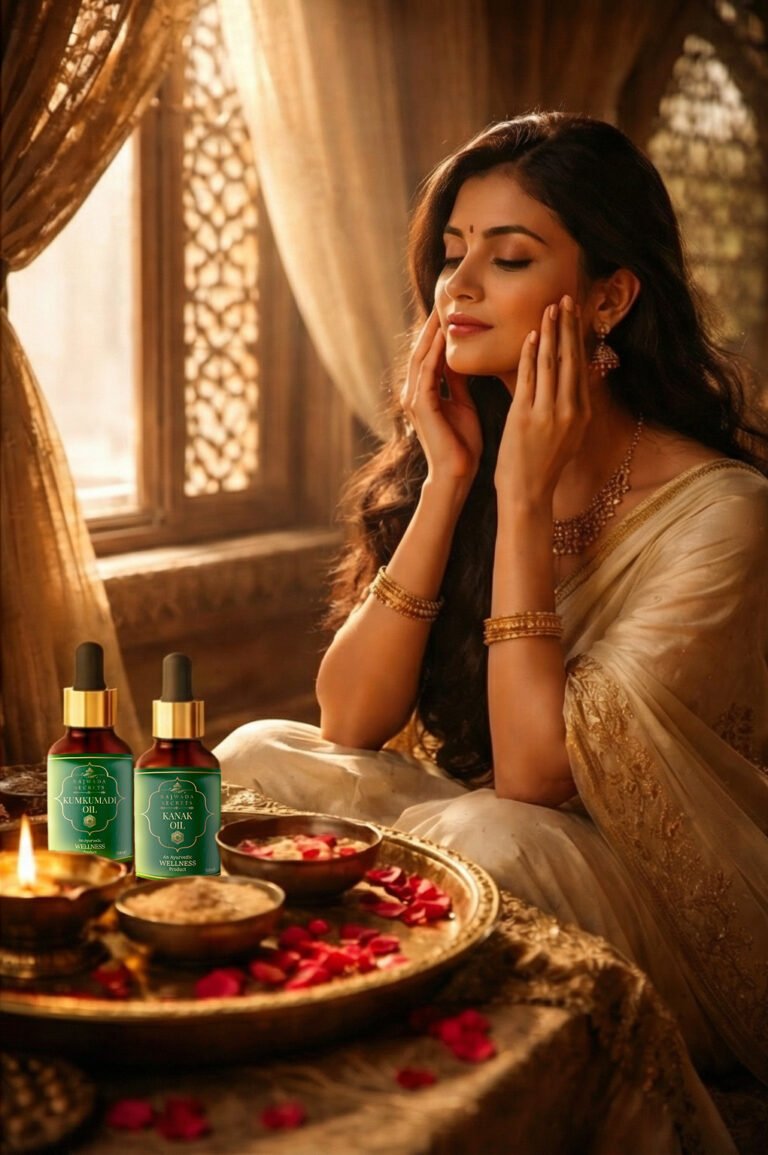
Face Oil vs Cream: Why Natural Oils Are Better Than Creams for True Skin Health
For decades, we’ve been taught a simple skincare rule: apply a cream, and your skin will be moisturized. But if that were enough, why do dryness, dullness, breakouts, pigmentation, and premature ageing persist—even after using expensive creams?
This leads us to an important question modern skincare is finally asking again:
Face oil vs cream—what truly nourishes the skin?
At Rajwada Secrets, we believe beauty is not cosmetic. It is constitutional. It is cultivated, not covered. Ayurveda has always known this.
Let us take you into a deeper understanding of why natural face oils often outperform creams—not as a trend, but as a timeless truth.
What Is a Face Oil vs a Cream?
Before comparing, we must understand their nature.
What Is a Face Oil?
A face oil is a lipid-based botanical extract—pressed from seeds, flowers, roots, or herbs. These oils are naturally rich in:
• Essential fatty acids
• Antioxidants
• Fat-soluble vitamins (A, D, E, K)
• Plant actives
In Ayurveda, oils are called Sneha—a word that also means affection, nourishment, and softness. Oils don’t just sit on your skin. They integrate into it.
This is why traditional Ayurvedic facial oils for glow were never optional—they were foundational.
What Is a Cream?
A cream is an emulsion: a mixture of water + oil + emulsifiers + stabilizers + preservatives.
Creams primarily hydrate the surface. They create comfort, but not deep tissue nourishment.
In Ayurvedic terms, creams mostly work at the outermost level—while oils work deeper, closer to the dhatus.
Face Oil vs Cream: 7 Reasons Oils Are Superior for Long-Term Skin Health
1) Oils Work With Your Skin’s Natural Biology
1) Your skin barrier is lipid-based. This means it is designed to accept oils.
Natural face oils:
✔ Strengthen the skin barrier
✔ Prevent moisture loss
✔ Improve resilience
✔ Reduce sensitivity
Creams, however, rely heavily on surface hydration that evaporates quickly.
In the face oil vs cream debate, oils win in biological compatibility.
2) Oils Nourish, Creams Mostly Hydrate
Hydration is water.
Nourishment is nutrition.
Creams give water.
Oils give fatty acids, antioxidants, vitamins, and phytochemicals.
Ayurveda calls this Rasayana—deep rejuvenation, not temporary glow.
3) Oils Penetrate Deeper
Oils are lipophilic, meaning they integrate easily into the skin’s lipid layers.
This allows them to:
✔ Improve texture
✔ Restore elasticity
✔ Strengthen skin over time
Creams mostly remain superficial.
This is why oils don’t just make your skin look good—they help it become better.
4) Oils Strengthen the Skin Barrier
A weak barrier causes:
• Dryness
• Acne
• Sensitivity
• Ageing
Face oils rebuild the lipid matrix that keeps your skin stable.
This is why many people notice that once they shift to oils, their skin becomes calmer, stronger, and more balanced.
5) Oils Support Slow Beauty, Not Instant Illusion
Modern skincare sells instant glow.
Ayurveda believes in sustainable radiance.
Oils work gradually:
• Improving tone
• Refining texture
• Softening lines
• Strengthening tissues
This is not makeup logic.
This is healing logic.
6) Oils Are Multi-Functional
A single oil can act as:
✔ Moisturizer
✔ Serum
✔ Massage medium
✔ Overnight nourishment
✔ Barrier protector
Creams often require layering with additional products.
Royal rituals were minimal—not maximal.
7) Oils Can Exist in Purity
High-quality oils can exist as pure, single-ingredient nourishment.
Creams almost always need:
• Emulsifiers
• Stabilizers
• Texture agents
• Preservatives
Ayurveda always preferred what the body recognizes.
Myth: “Oils Are Greasy and Cause Acne”
This myth comes from using the wrong oil for the wrong skin type.
When chosen correctly:
✔ Oils absorb
✔ Balance sebum
✔ Reduce congestion
✔ Support healing
In fact, oil dissolves oil—helping regulate excess sebum.
What Ayurveda Says About Skin Nourishment
Ayurveda does not ask, “Is your skin dry or oily?”
It asks: What is your prakriti?
Your skin reflects doshic balance:
• Vata skin → dry, thin → needs heavier oils
• Pitta skin → sensitive → needs cooling oils
• Kapha skin → thick → needs light penetrating oils
This is why you must find your skin’s dosha before choosing products.
Face Oils vs Cream: Why Royal Traditions Trusted
From queens of Rajasthan to temple dancers of the south, oils were used for:
• Facial massage
• Skin strengthening
• Glow rituals
• Ageing gracefully
Not for beauty.
For health that reflected as beauty.
These traditional Ayurvedic skincare rituals were not indulgences—they were necessities.
Beauty was once a ritual, not a routine.
Reclaim your royal glow with our traditional oil blends.
Rajwada Secrets Philosophy – Face Oil vs Cream
At Rajwada Secrets, we don’t follow trends.
We revive wisdom.
We believe:
- Skin is not a canvas
- It is a living tissue
- It deserves nourishment, not decoration
Our oils are crafted to follow Ayurvedic principles of:
• Sneha (nourishment)
• Balya (strength)
• Rasayana (rejuvenation)
Explore our Ayurvedic facial massage oils designed for deep nourishment.
Final Verdict: Face Oil vs Cream
If your goal is:
✔ True nourishment
✔ Stronger skin
✔ Long-term glow
✔ Fewer products
✔ Deeper healing
Then oils are not a trend.
They are a return.
Your skin does not need more products.
It needs better nourishment.
Link: Explore Rajwada Facial Oils
No comment yet, add your voice below!